Repeats

What Is a Half Drop Repeat?

How the half drop repeat works, why it looks more natural than a straight repeat, and how to build and send one to a printer.
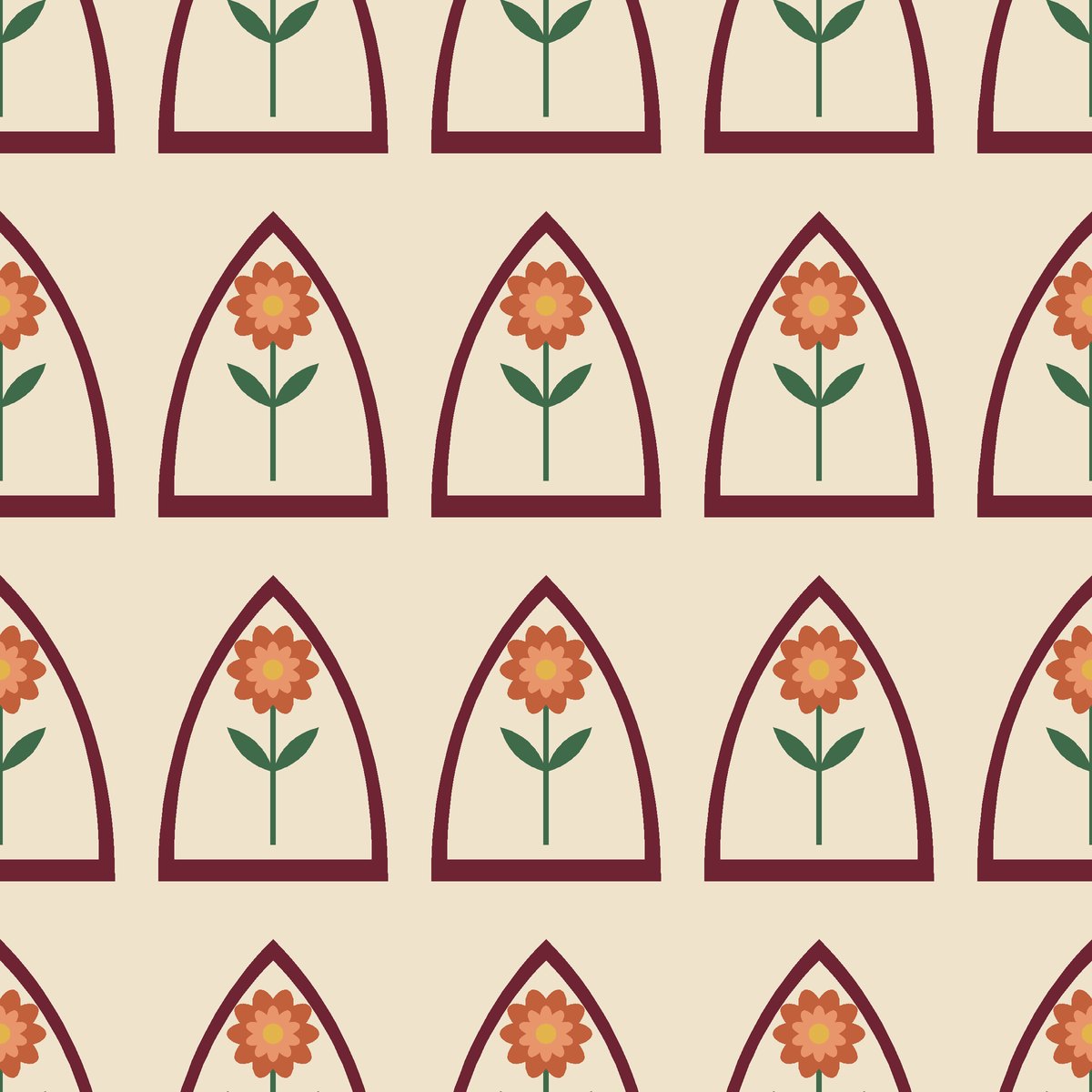
Mughal Arch Garden — seamless pattern repeat

The half drop is the most widely used repeat layout in printed textiles. If you look closely at a floral dress fabric or a wallpaper, there is a good chance the motifs are arranged in one.

The definition

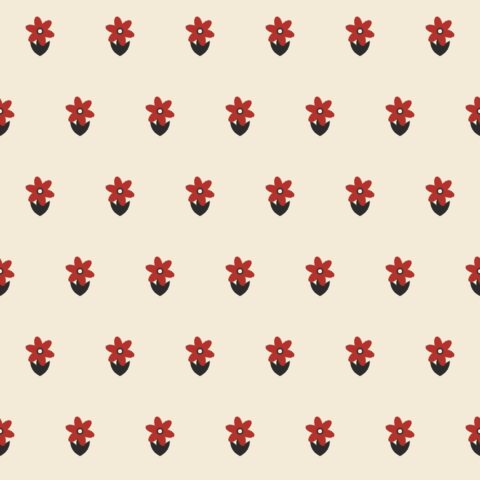
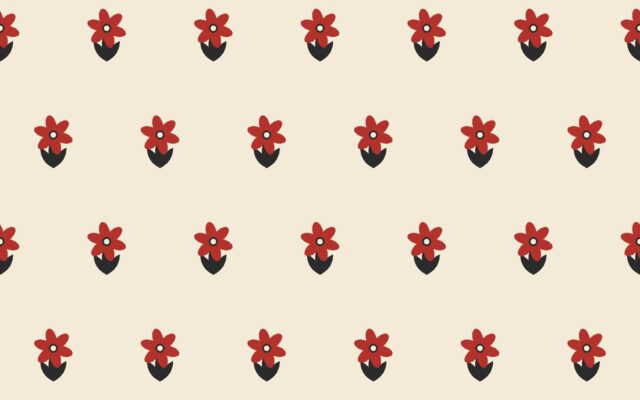
In a half drop repeat, the artwork is arranged in vertical columns and every second column is shifted down by half the height of the repeat. Instead of forming horizontal rows, identical motifs line up along diagonals.

Why designers use it

  • It hides the grid. A straight repeat can make motifs stack into obvious rows and columns. The diagonal arrangement of a half drop reads as a more natural, all-over spread.
  • It needs fewer motifs. A single bouquet in a half drop already looks “tossed” across the fabric.
  • It flatters garments. Diagonal rhythms are less likely to create bold horizontal stripes across the body.

Half drop vs. other repeats

RepeatOffsetTypical uses
Straight / blockNoneGeometrics, checks, spot prints
Half dropColumns move down by ½ heightFlorals, conversationals, dresswear, wallpaper
BrickRows move across by ½ widthDirectional motifs, borders, tiles
MirrorFlipped copiesDamask, medallions, kaleidoscopic prints

How big is a half drop tile?

This is where many designers get confused. The design unit is one column cell, but the smallest rectangle that repeats on a simple grid contains two columns: the original and the dropped copy. So a 30 × 30 cm half drop design has a 60 × 30 cm repeat tile.

Some printers ask you to supply the single unit and specify “half drop”; most digital textile RIPs simply repeat whatever rectangle you supply. If in doubt, send the full two-column tile — it works everywhere as a straight repeat.

Making a half drop

In the browser

Upload a motif or a finished tile to the Half Drop Repeat Generator, adjust spacing and scale, and download the two-column tile.

In Photoshop

Create your straight tile first. Then double the canvas width (Image → Canvas Size, anchored left), duplicate the tile into the right-hand half, and offset that copy vertically by half the height with wrap-around. Our Photoshop repeats guide covers the exact steps.

Third and quarter drops

A drop does not have to be half. A ⅓ drop shifts each column by a third of the height, creating a longer diagonal staircase; the full tile then contains three columns. These are useful for large-scale designs where even a half drop starts to look regular.