Printing

How to Prepare a Pattern for Different Fabric Widths

Adapting one design to 112 cm, 140 cm, 150 cm and wide-width fabrics without awkward partial repeats or rescaled motifs.

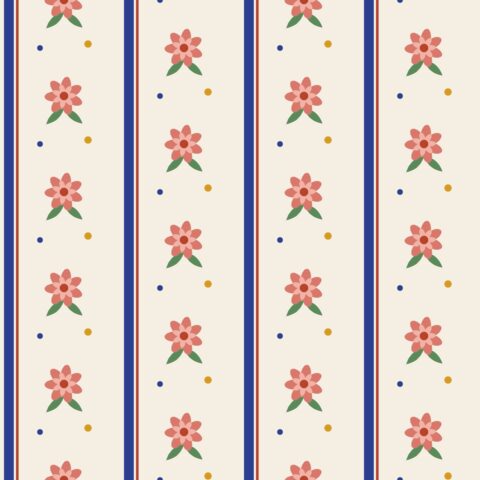
Modern Grid Bloom — seamless pattern repeat

The same design is often printed on several bases — quilting cotton, linen, jersey, sateen — and each comes in a different width. For continuous yardage this rarely matters, but for engineered prints, borders and panels it can make or break the product.

Know the widths you will print on

WidthCommon bases
112 cm (44″)Quilting cotton, poplin
137–140 cm (54–55″)Canvas, linen, home décor
145–150 cm (57–59″)Dress fabrics, jersey, many digital print bases
280 cm (110″)Sheeting, wide-width curtains

Subtract the selvedges to get the printable width, and confirm it with each printer — it varies between suppliers.

Case 1: Continuous yardage

For an all-over repeat sold by the metre, a partial repeat at the edge is normal and invisible once the fabric is cut. Keep one master repeat size for all bases. If your printer centres the design, the partial repeats will be equal on both sides.

Case 2: Borders and engineered placements

Border prints, sarees, dupattas, scarves and tablecloths need the design to fit the width exactly. Two strategies:

  • Scale the repeat so a whole number fits. The Fabric Width Calculator lists repeat sizes that divide each width exactly and the scale percentage needed.
  • Add or remove repeats and adjust a flexible area — such as a plain ground or a filler band — to absorb the difference without rescaling motifs.

Case 3: Products cut from a full width

For cushions, bags and quilt panels, design a “cutting layout” at the exact printable width: arrange whole panels side by side with cutting margins between them. This maximises yield and ensures every piece shows the same part of the design.

Keep scale consistent across a collection

Customers notice when the same floral is noticeably larger on one product. If you must rescale for a width, keep the change small (under about 10%) or create a dedicated smaller-scale version. The Pattern Scale Calculator shows the effect on pixel size and resolution.

Document each variant

Record base, width, repeat size and scale in the file name and in a simple spec sheet. When reorders come months later, you will know exactly which file belongs to which fabric.