How to Recolor a Textile Pattern
Methods for building colourways — from quick browser recolouring to Photoshop adjustment layers and indexed colour separations.

A single design usually sells in several colourways — versions of the same artwork in different colour combinations. Building them efficiently is an essential textile design skill.
Plan the colourway first
Decide the role of each colour: the ground (background), the main motif colours and the accents. A good colourway keeps the same value (light–dark) structure as the original, so the design still reads clearly. Swapping a dark ground for a light one changes the whole character of a print.
The Textile Color Palette Tool helps you build palettes with a ground colour, and the Color Palette Extractor pulls palettes from inspiration images.
Method 1: Quick colourways in the browser
The Pattern Recolor Tool detects the main colour groups in your artwork, lets you choose a new colour for each, and saves several colourways side by side. Use Keep shading for painted or textured designs and Flat colour for clean, screen-print-style art. It is ideal for exploring options before refining in Photoshop.
Method 2: Photoshop adjustment layers
- Select one colour area with Select → Color Range (adjust Fuzziness until the selection is clean).
- Add a Hue/Saturation or Solid Color adjustment layer — the selection becomes its mask.
- Repeat for each colour, naming layers by role (Ground, Petal, Leaf…).
- Group the adjustments per colourway and toggle groups to compare.
This keeps the original artwork untouched and makes colourways easy to edit later.
Method 3: Separated artwork
For screen printing or very controlled digital printing, designers keep each colour on its own layer or channel, or convert flat artwork to Indexed Color and edit the colour table. Changing one entry recolours every pixel of that colour instantly and exactly. This requires clean, non-anti-aliased edges, so plan for it from the start of the design.
Check the colourway
- View all colourways at small size together — does each still have a clear focal point?
- Check contrast between motifs and ground.
- Show them on products with the Pattern Mockup Generator.
- Print a colour chart on the target fabric and match critical colours.
Tools mentioned in this guide
View allPattern Recolor Tool
Detect the colours in a pattern, swap any of them, and save several colourways side by side.
Color Palette Extractor
Pull the main colours from any image and download them as Photoshop swatches (.aco), ASE, GIMP palette or a palette…
Textile Color Palette Tool
Generate textile-friendly colour palettes from one key colour, with a neutral ground, locks, shuffle and a live pattern preview.
Patterns to practise with
View all
Free
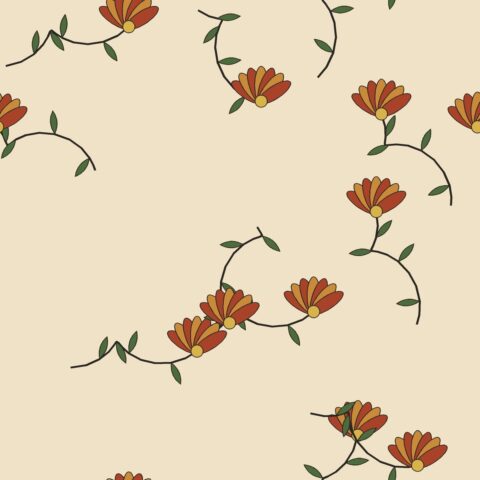
Lotus Vine (Kalamkari-inspired)
Premium
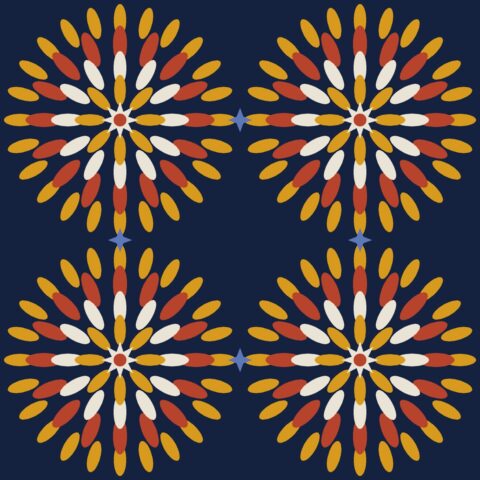
Mandala Medallion
Free
Little Stars & Clouds
Free
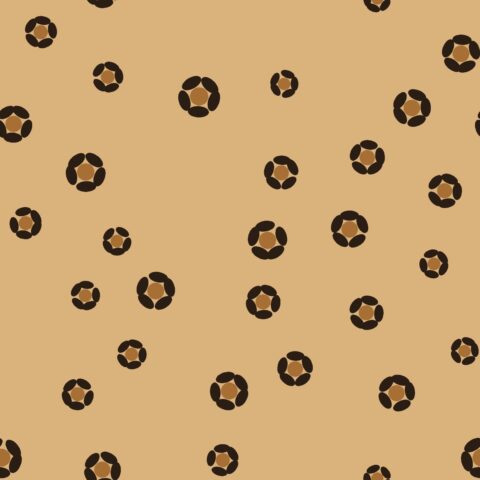
Golden Leopard Rosette
Keep reading
View all
RGB vs CMYK for Textile Printing
Should textile artwork be RGB or CMYK? How digital fabric printers handle colour, why brights shift, and how to get predictable results.
How to Prepare Artwork for Fabric Printing
A pre-flight checklist for textile print files: repeat checks, resolution, colour, file format, naming and strike-offs.

How to Create Textile Repeats in Photoshop
A practical Photoshop workflow for straight, half drop and brick repeats using the Offset filter, Define Pattern and Pattern Preview.